
Public Broadcasting: Past, Present & Future
In 1967 the Carnegie Commission Report, the founding document for public broadcasting, stated unambiguously that the U.S. should have a non-commercial TV and radio system offering programming that serves as “a forum for debate and controversy” and “provide[s] a voice for groups in the community that may otherwise be unheard.” That same year, Congress passed the Public Broadcasting Act, the last major piece of Great Society legislation to be enacted. In subsequent decades, political pressure and lack of adequate funding have moved public TV & radio away from their founding principles.
Speaker
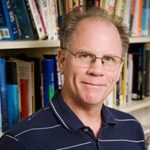
Robert McChesney
Robert McChesney was a leading media historian and public intellectual. He was a professor at the School of Journalism and Mass Communications at the University of Wisconsin-Madison and later was the Gutgsell Endowed Professor in the Department of Communication at the University of Illinois at Urbana–Champaign. He was co-founder of Free Press, a non-profit organization working to increase public participation in media policy debates. His work focused on the role of journalism and democracy in a capitalist system. An activist scholar, he was a champion of independent progressive media. Noam Chomsky said, “Robert McChesney’s work has been of extraordinary importance. It should be read with care and concern by people who care about freedom and basic rights.” A prolific author, among his many books are Rich Media, Poor Democracy, Blowing the Roof off the Twenty-First Century, and Digital Disconnect. He is co-author with John Nichols of Dollarocracy and People Get Ready. Robert McChesney passed away in late March 2025.

Reviews
There are no reviews yet.