
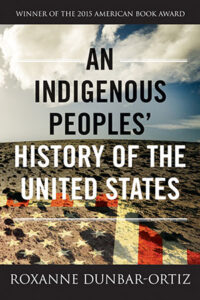
An Indigenous Peoples’ History of the United States
$19
10th Anniversary Edition
This class-savvy history explores the silences haunting our national narrative. Roxanne Dunbar-Ortiz is a great historian and this is her masterwork.
This brilliant bottom-up people’s history places settler-colonialism and genocide exactly where they belong: as foundational to the existence of the U.S., told from the perspective of Indigenous peoples and how they actively resisted the attacks upon them. Dunbar-Ortiz writes, “Survival is dynamic, not passive. Surviving genocide, by whatever means, is resistance: non-Indians must know this to more accurately understand the history of the U.S.”
Robin D. G. Kelley says, “This may well be the most important U.S. history book you will read in your lifetime.”
Winner of the American Book Award.
Author
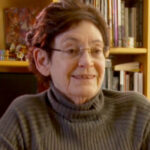
Roxanne Dunbar-Ortíz
Roxanne Dunbar-Ortiz grew up in rural Oklahoma, the daughter of a tenant farmer and part-Indian mother. A distinguished scholar, she has been active in the international Indigenous movement for many years and is known for her commitment to social justice issues. She is the recipient of the 2017 Lannan Cultural Freedom Prize. Her 1977 book The Great Sioux Nation was the fundamental document at the first UN conference on Indigenous peoples of the Americas. She is the author of An Indigenous Peoples’ History of the United States, winner of the 2015 American Book Award, Loaded: A Disarming History of the Second Amendment, All the Real Indians Died Off and 20 Other Myths about Native Americans and Not a Nation of Immigrants.
“Roxanne Dunbar-Ortiz is a one-woman wrecking ball against the tower of lies erected by ‘official’ historians.”- Ishmael Reed
From The Santa Fe New Mexican: “She’s a Myth-Buster. When it comes to Native American history, Roxanne Dunbar-Ortiz is out to squash every superstition, lie, and rumor.”


Gary in Denver –
This book is most enlightening. I highly recommend reading it.
GRAHAM –
The arrogance behind European colonialism is spelled out for all to see.