
Roots of U.S. Intervention in Central America
The U.S. invasion of Panama and its continuing involvement in El Salvador, Nicaragua, Guatemala and Honduras are deeply rooted in our foreign policy. Chomsky traces the systematic pattern of U.S. intervention which he contends has promoted and served two goals: making the region safe for U.S. investment and thwarting independent development. The political, social and human consequences of these policies have been disastrous for the people of Central America and ultimately for the U.S. This program is a valuable tool for understanding our present and future relationship with Central America.
Recorded at Lewis and Clark College.
Speaker
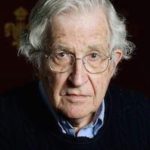
Noam Chomsky
Noam Chomsky, by any measure, has led a most extraordinary life. In one index, he is ranked as the eighth most cited person in history, right up there with Aristotle, Shakespeare, Marx, Plato, and Freud. His contributions to modern linguistics are legendary. In addition to his pioneering work in that field, he has been a leading voice for peace and social justice for many decades. Chris Hedges says he is “America’s greatest intellectual” who “makes the powerful, as well as their liberal apologists, deeply uncomfortable.” The New Statesman calls him “the conscience of the American people.” He is Professor Emeritus in the Department of Linguistics and Philosophy at MIT and Laureate Professor of Linguistics and Haury Chair in the Program in Environment and Social Justice at the University of Arizona. At 97, though having health setbacks, he continues to inform and inspire people all over the world. He is the author of scores of books, including Masters of Mankind, Consequences of Capitalism, Chronicles of Dissent, and Notes on Resistance. He is co-author with Edward Herman of Manufacturing Consent. His latest books are The Myth of American Idealism: How U.S. Foreign Policy Endangers the World and Surviving the 21st Century.

Reviews
There are no reviews yet.