
Activist Victories
Chomsky describes the impact and influence of activists and solidarity movements. He says, e.g., Because of opposition “the Reagan administration was never able to intervene directly in Central America a la Kennedy and Johnson were able to do in Southeast Asia in the 1960s.” He also discusses “worthy and unworthy victims,” one of the themes he and Edward Herman developed in their classic book Manufacturing Consent. He adds some interesting comments about the 150th anniversary of The Communist Manifesto, as well as his own education including high school in Philadelphia where he said, he “sank into a black hole.”
Interviewed by David Barsamian
Recorded at KGNU
Speaker
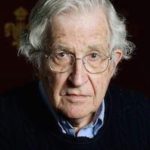
Noam Chomsky
Noam Chomsky, by any measure, has led a most extraordinary life. In one index, he is ranked as the eighth most cited person in history, right up there with Aristotle, Shakespeare, Marx, Plato, and Freud. His contributions to modern linguistics are legendary. In addition to his pioneering work in that field, he has been a leading voice for peace and social justice for many decades. Chris Hedges says he is “America’s greatest intellectual” who “makes the powerful, as well as their liberal apologists, deeply uncomfortable.” The New Statesman calls him “the conscience of the American people.” He is Professor Emeritus in the Department of Linguistics and Philosophy at MIT and Laureate Professor of Linguistics and Haury Chair in the Program in Environment and Social Justice at the University of Arizona. At 97, though having health setbacks, he continues to inform and inspire people all over the world. He is the author of scores of books, including Masters of Mankind, Consequences of Capitalism, Chronicles of Dissent, and Notes on Resistance. He is co-author with Edward Herman of Manufacturing Consent. His latest books are The Myth of American Idealism: How U.S. Foreign Policy Endangers the World and Surviving the 21st Century.


Reviews
There are no reviews yet.